Rink Hockey 2026: The Guide to the New World Skate Rules
Introduction: A Stricter Era Begins in America. With the start of the new season on the continent, rink hockey enters a new dimension. This update aims for a more dynamic and physical game, but above all, it imposes a much more severe disciplinary regime. There is no longer room for verbal warnings; the enforcement of the rules will be absolute and immediate.
1. Absolute Power Play: Shorthanded Play is Non-Negotiable
This is the most profound change in match management.
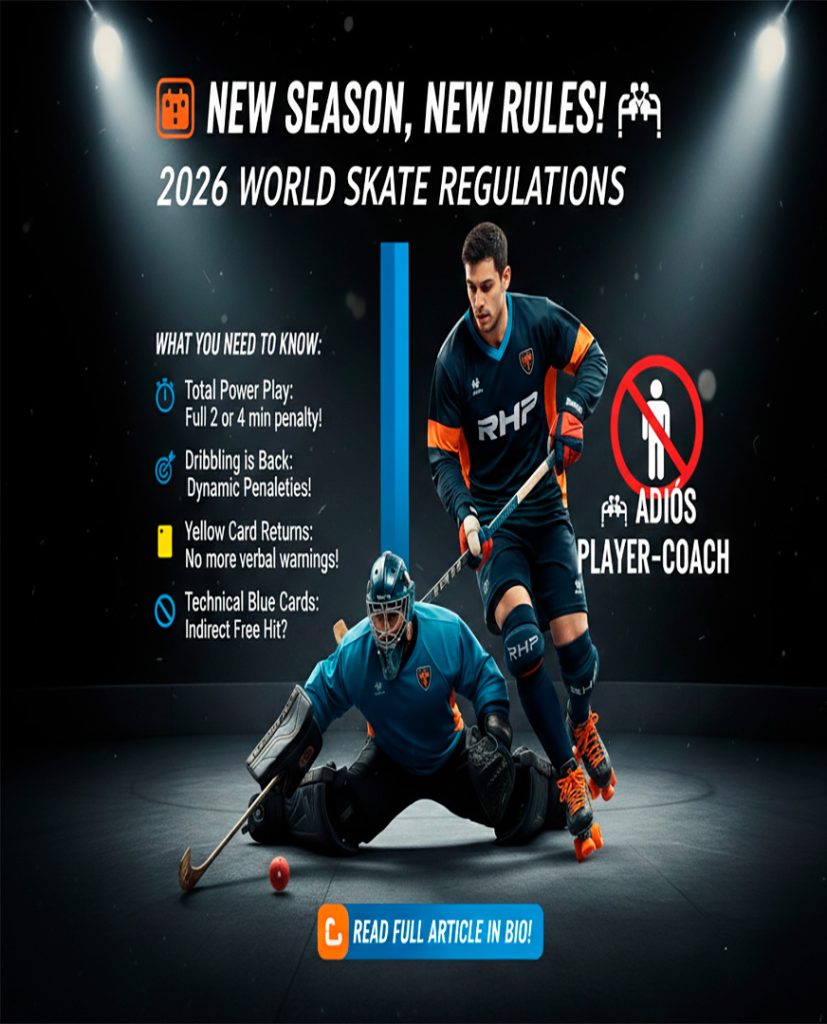
- Real-Time Sanction: Previously, conceding a goal allowed a team to restore numerical equality. That is no longer the case. Sanctions for Blue Cards (2 minutes) or Red Cards (4 minutes) must be served in their entirety from start to finish.
- Double Punishment: If a team concedes one or more goals while shorthanded, the penalized player remains in the box and the team continues with one less player until the penalty clock hits zero. The goal no longer “frees” the team from inferiority.
2. The Return of the Yellow Card
The yellow card returns to rink hockey to eliminate verbal warnings and “talks” between referees and players.
- On the Rink: Two yellow cards shown to the same player result in a Blue Card.
- On the Bench (Collective Warning): This is the most critical point for coaching staffs. The first yellow card shown to any member of the bench (substitute or staff) serves as a warning for everyone. The next yellow-card offense by any bench member will result in a straight Red Card for the offender and 4 full minutes of inferiority for the team on the rink.
- Ball Throwing: Intentionally throwing the ball off the rink to prevent a quick restart by the opponent is now sanctioned with a Yellow Card + Team Foul.
3. Penalties and Direct Free Hits: Dribbling is Back
The essence of the individual duel is recovered, allowing for greater creativity:
- Dynamic Penalty: The obligation of the static shot is over. Takers can now start the movement, fake, and dribble to face the goalkeeper, just like in a direct free hit.
- Goalkeeper Mobility: The keeper is allowed to move or step forward as soon as the referee blows the whistle.
- The 5-Second Rule: If a direct free hit or penalty is called with less than 3 seconds left on the clock, the timer will be reset to 5 seconds for the execution. This time is for the shot only; there is no possibility for a rebound play.
4. Blue Cards WITHOUT Direct Free Hits
A fundamental technical nuance: the blue card punishes the foul, but it doesn’t always grant a direct free hit.
- No Scoring Opportunity: If a blue-card foul occurs but does not interrupt a “Clear Goal-Scoring Opportunity” (player alone in front of the goal), the card is issued (2-minute absolute inferiority), but play restarts with an Indirect Free Hit.
- Substitutions: An irregular substitution results in a Blue Card, but it does not lead to a direct free hit if the game was active.
5. Other Key Changes
- Body Usage: Playing the ball with skates, lower limbs, and even the waist is permitted, allowing for a more physical flow.
- Player-Coach: This dual role is now strictly prohibited; coaching and playing functions must be clearly separated.
- Equipment: Absolute rigor is required for uniforms (socks must fully cover protections without showing other colors).
Hockey 2026: Guía del Nuevo Reglamento
El inicio de una era más estricta en América. Con el comienzo inminente de la nueva temporada, entra en vigor el Reglamento World Skate 2026. Esta actualización busca un juego más dinámico y físico, pero sobre todo, impone un régimen disciplinario mucho más severo. Ya no hay lugar para las advertencias: el cumplimiento de las normas será absoluto.
1. Power Play: La inferioridad numérica es inamovible
Este es el cambio más profundo en la gestión de los partidos.
- Sanción por tiempo real: Antes, un gol recibido permitía recuperar la igualdad numérica. Ahora no. Las sanciones de 2 minutos (Azul) o 4 minutos (Roja) se deben cumplir íntegramente de principio a fin.
- Doble castigo: Si un equipo recibe uno o varios goles durante la inferioridad, el jugador sancionado sigue fuera y el equipo continúa con un jugador menos hasta que el cronómetro de la falta llegue a cero. El gol ya no “libera” al equipo de la inferioridad.
2. El regreso de la Tarjeta Amarilla
La tarjeta amarilla vuelve al hockey para eliminar las advertencias verbales.
- En pista: Dos amarillas a un mismo jugador se convierten en una Tarjeta Azul.
- En el banco (Aviso Colectivo): Es el punto más crítico para los cuerpos técnicos. La primera amarilla a cualquier miembro del banco es una advertencia para todos. La siguiente falta de amarilla de cualquier integrante resultará en Tarjeta Roja directa para el infractor y 4 minutos de inferioridad para el equipo en pista.
- Lanzamiento de bola: Tirar la bocha fuera de la pista intencionalmente para evitar un reinicio rápido del rival ahora es Tarjeta Amarilla + Falta de equipo.
3. Penaltis y Libres Directos: El regreso del Dribbling
Se recupera la esencia del duelo individual, permitiendo mayor creatividad al lanzador:
- Penalti Dinámico: Se termina la obligación del tiro estático. El lanzador puede iniciar el movimiento, amagar y salir dribleando para encarar al portero, igual que en un libre directo.
- Movilidad del portero: El arquero puede moverse o adelantarse en cuanto suene el silbato.
- Regla de los 5 segundos: Si se pita una falta directa o penalti faltando menos de 3 segundos para el final, el reloj se ajustará a 5 segundos para la ejecución. Es un tiempo único para el tiro; no hay posibilidad de rebote.
4. Azules que no siempre son Directos
Un matiz técnico fundamental: la tarjeta azul penaliza la falta, pero no siempre otorga un libre directo.
- Sin Ocasión de Gol: Si la falta es azul pero no interrumpe una “ocasión manifiesta de gol” (jugador solo frente al arco), se sanciona la tarjeta (inferioridad de 2 min) pero se reanuda con Libre Indirecto.
- Sustituciones: Una sustitución mal hecha es Tarjeta Azul, pero no conlleva libre directo si el juego estaba activo.
5. Otros cambios clave
- Uso del cuerpo: Se permite jugar la bola con los patines y la cintura inclusive, permitiendo un juego más físico.
- Jugador-Entrenador: Esta figura queda estrictamente prohibida; las funciones deben estar separadas.
- Equipamiento: Se exige rigor total en el uniforme (medias que cubran totalmente las protecciones sin mostrar otros colores).
Por: Renzo Curtosi
RINK HOCKEY PRO