Where Is Rink Hockey Headed? An Open Proposal to Save Our Mystique and the Future of the Sport
By Renzo Curtosi / Rink Hockey Pro
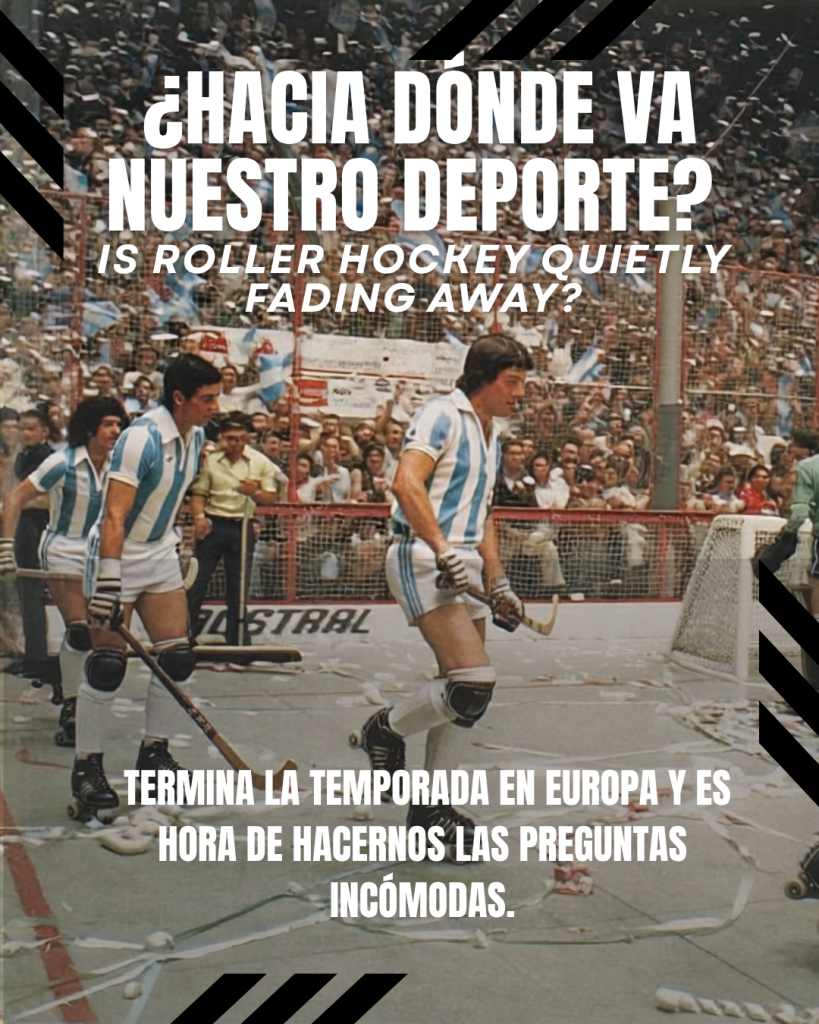
Now that the European season is coming to an end and we have a reasonable window of calm before the Asunción 2026 World Skate Games, it is the ideal moment to pause. Let’s take advantage of this break in the calendar to reflect on some core questions about where our sport is actually headed.
I am writing this from the place I know best: as someone who is madly in love with this sport. I am not a political director, nor do I claim to hold the absolute truth; I am just another hockey fanatic watching with deep concern as our identity fades away.
What you are about to read is not meant to be a lecture for anyone, but rather a catharsis and an open proposal for debate. I am fully aware that I might have contradictions or details that slip right past me, and that is precisely why I want us to discuss it. But something must be done before it is too late.
1. The Wrong Symptom: Rule Changes
Lately, the outrage on social media and at the rinks revolves around constant rule changes: the video refereeing (VAR), cards no longer being canceled by goals, referee rigidity, or the controversial idea of opening the door to inline skates.
If you ask me as a player, I’ll tell you the truth: they are awful. I feel they completely kill the emotion. Today, it seems that playing style rewards speculation and baiting fouls to gain a numerical advantage, instead of encouraging beautiful play, raw creativity, rehearsed tactics, and that indescribable magic that defines traditional roller hockey.
But let’s be honest: the rulebook is not the true cancer of roller hockey. Whether we like the television aesthetic they are chasing or not, the real danger is elsewhere: the current tournament structure is financially draining our federations and diluting our identity.
2. World Skate, the IOC, and the Need to Wake Up
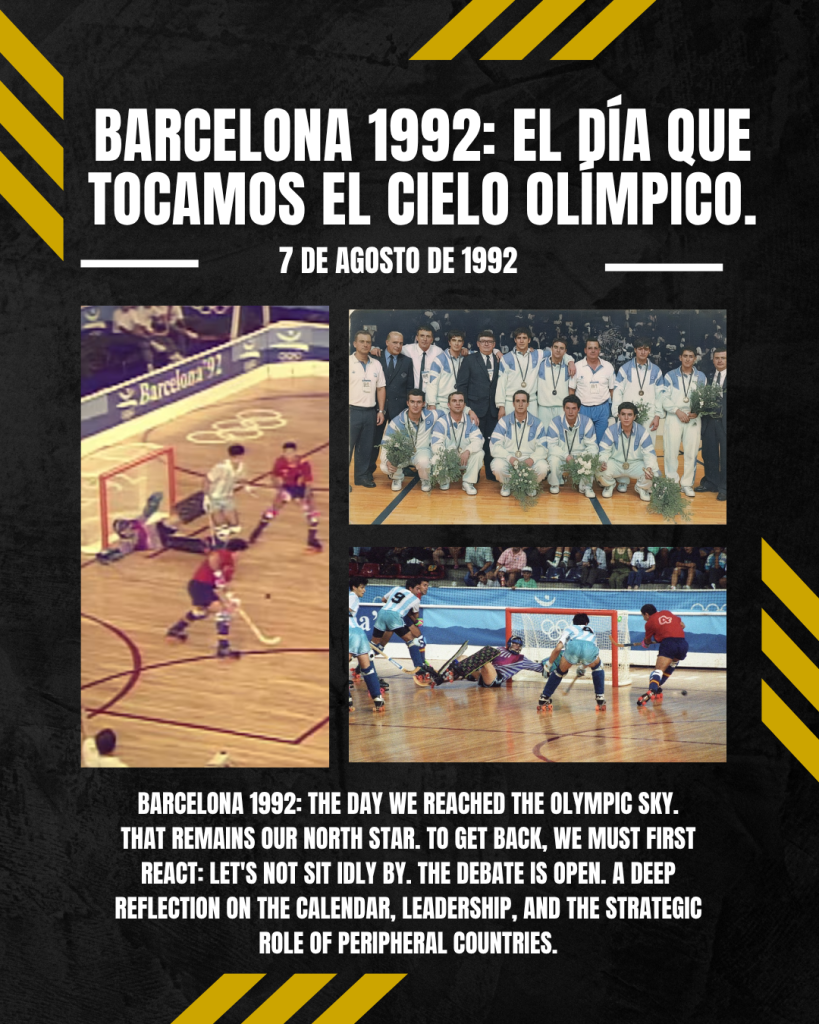
Let’s bring ourselves down to reality: we completely understand World Skate’s (WS) position and their interests regarding the International Olympic Committee (IOC). We share them. There isn’t a single person on earth who doesn’t dream of seeing traditional roller hockey become an Olympic sport.
WS’s current strategy is to cluster everyone every two years at the World Skate Games (WSG) to showcase a massive, unified monster to the IOC, leveraged by the urban success of Skateboarding. The leadership of the global skating world seems to believe in a sort of “trickle-down effect”—that the Olympic shine of skate will eventually benefit hockey.
But here is the reality check we must accept: if traditional roller hockey dies of economic starvation and loses its grassroots base, World Skate’s world will not fall apart. They will keep existing just fine because they have skateboarding and speed skating to sustain their entire structure. Clearly, we are not the core piece of their strategy, and if we just sit back, they will phase us out through sheer attrition.
This is not a call to throw rocks at WS’s storefront, nor is it a childish demand to break away. On the contrary. We can coexist perfectly and help each other out, but for that to happen, we need high-ranking roller hockey officials to react.
Political pressure must come from us to demand a seat at the table to negotiate with sharpened teeth, establishing strategic conditions that protect our sport within that coexistence. It is a political decision for our representatives to make, and it is up to us, the community that breathes hockey, to spark the debate and force them to move.
3. The True Cost of the Current WSG: The Asunción Example
Demanding federations to travel every two years with mega-delegations is financial madness. Currently, three categories are already being flown out together (Senior Men’s, Senior Women’s, and Under-19 Men’s) and, even though the Under-19 Women’s category is not yet official in the current tournament in Paraguay, the event’s trajectory was headed toward overburdening national budgets even more.
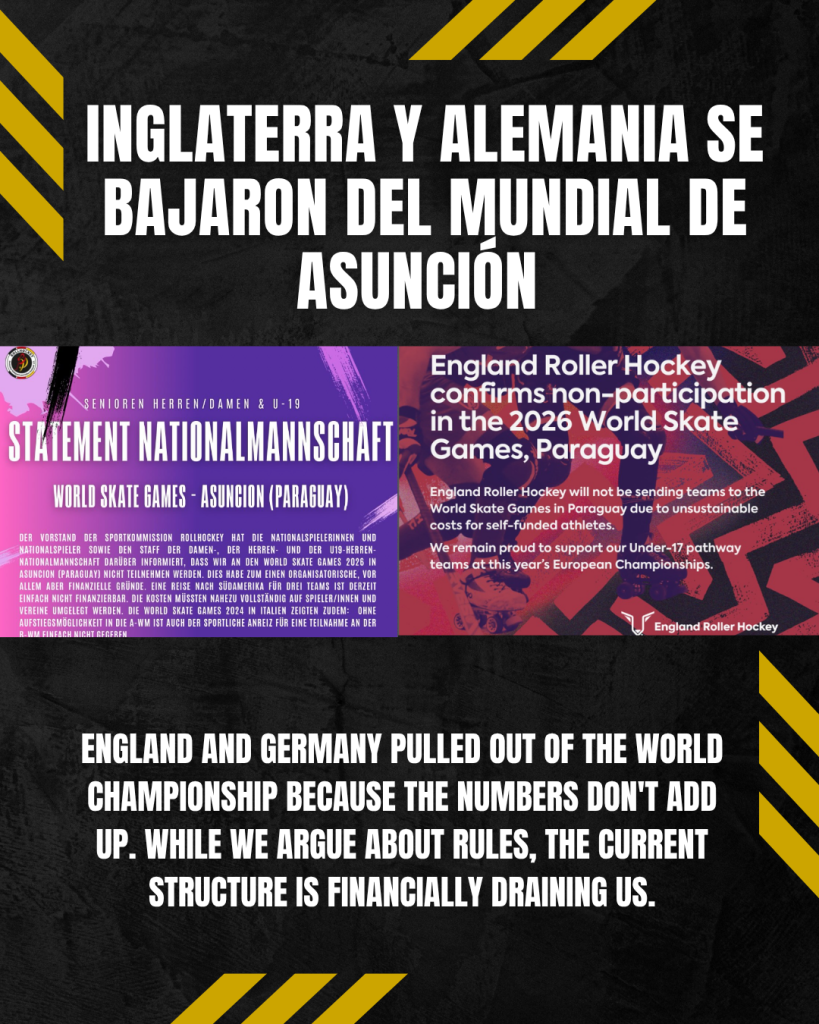
The results of this financial chokehold are already on display for everyone to see: historic federations like Germany and England have just withdrawn from participating in the World Championship in Asunción. They are not traveling because the numbers don’t add up. It’s that simple and that sad.
On top of this, the choice of host city does absolutely nothing to benefit hockey. Paraguay is a place where our discipline is virtually non-existent, and there is no evidence of a strong promotion or infrastructure policy to establish and plant the roots of the activity. It is an enormous expense for the delegations in exchange for an almost non-existent local impact.
To make matters worse and more contradictory, alarming rumors are swirling in the corridors of WS: the intention to bar national teams from participating in the B or C World Championships if they did not take part in their Continental Tournament. This is a logistical disaster. On one hand, they try to strengthen the continental tournament (which makes sense), but on the other hand, it is a tremendous strategic blunder. If your ultimate goal is to sell a massive product to the IOC with many countries practicing it, leaving developing federations out over an administrative detail is shooting yourself in the foot.
Guys, winning a “Challenger Cup” in an empty stadium does not feel like a World Cup. That is not a World Cup.
4. The Proposal: A 4-Year Olympic Cycle and the Awakening of Continentals
To save hockey and, in turn, offer WS a truly strong, mature, and commercial Senior product, I propose structuring the calendar around a 4-year cycle:
- Year 1: The Continental Tournament as a Premium Gala Event. Currently, qualifying through the Pan-American or European tournaments is already mandatory to reach the A World Championship. However, the reality is that these regional tournaments are organized in a rush, with razor-thin budgets and historic dropouts. The proposal to extend the cycle to 4 years is precisely to give the calendar breathing room and overhaul the Continentals. By not competing with a World Cup every two years, this tournament becomes the absolute focal point of the season. We propose a special, high-profile event planned at least two years in advance with aggressive marketing and promotion. This will allow national federations (especially peripheral ones) to factor the expenses into their annual budgets well ahead of time, ensuring they bring their absolute best rosters and lock down local sponsorships. Localizing travel expenses within a tournament elevated to an “Olympic-style Show” will guarantee that every country plays with everything on the line, bringing packed stadiums back to the regional level.
- Year 2: The WSG for the Youth Base. Hockey still attends the WSG, but it goes strictly with youth categories (U19) or development/U23 national teams. This fits perfectly with the young vibe the IOC seeks, WS maintains its unified commercial brand, and federations drastically slash their delegation costs.
- Year 3: Breathing Room for Clubs and Development. A year completely clear of Senior national team tournaments. Professional hockey lives through the clubs (the OK Liga, the Portuguese Championship, the National League in Argentina); we must protect them and the physical well-being of the players. This year is reserved for the mystique of the Montreux Nations Cup and to prepare for the grand event.
- Year 4: THE ROLLER HOCKEY WORLD CHAMPIONSHIP. The crown jewel. A single host country with deep hockey culture, housing a unified A World Championship of 16 teams (Senior Men’s and Women’s simultaneously). This premium format deserves to explode in historic venues like Italy, Switzerland, France, Germany, Spain, or Argentina. Furthermore, under a framework of heavy international backing, we could project toward Angola or open borders in Africa, capitalizing on recent spectacular experiences like the first championship in Benin, where the local community welcomed hockey with incredible energy.
5. A Serious B World Championship: Integration, Clinics, and Real Support
Even though a three-tier world championship structure (A, B, and C) currently exists, the current format stagnates teams in the “grey zone.” These are countries trapped in a middle ground where the B World Cup group stage offers no real challenge, yet when they manage to promote to the A World Cup, the system condemns them to playing practically a single decisive match without the necessary competitive pacing. What we want to emphasize is that it is infinitely more beneficial for development to guarantee these teams 3 matches at the absolute highest level in the A World Cup group stage, while the B teams play their own group stage against evenly matched opponents, only to later push themselves to the absolute limit by crossing over with those who drop down. Today, by removing that progressive friction, the system stifles growth.
We must expose the grand contradiction of the current system: leadership, driven by a fear of aesthetic marketing and avoiding a “blowout photo” on television in front of the IOC, prefers to competitively isolate teams. By masking the symptom and separating tiers so rigidly, the only outcome is a widening gap instead of a narrowing one. Depriving mid-tier national teams of constant competition against the Top 8 places an artificial glass ceiling over them. A team’s performance only improves through real competition; it is a brutal process where losing a lot is unavoidable. What we can do, however, is better safeguard and support that process.
This is why expanding the A World Championship to 16 teams with integrated crossover brackets works as a legitimate ladder for sports development:
Cascading Effect to the C World Championship: This exact identical blueprint replicates between the eliminated rosters from the B group phase and the final tournament stages of the C World Championship for developing nations. This structure avoids meaningless blowout matches in the opening stages, guarantees increasingly tighter, competitive fixtures across all playing levels, and justifies the travel investment for every federation.
The Impact of the Bracket: By widening the A World Championship to 16 national teams, mid-tier squads will push themselves to the absolute limit to compete face-to-face against the Top 8 powerhouses they meet in the group stage. It is a harsh reality check, but a necessary one. Following the group stage (Day 3), the top two from each group advance to the A World Championship Quarterfinals. The eliminated teams (3rd and 4th place) drop down but do not go home: they seamlessly enter the knockout stage (Quarterfinals) of the B World Championship, matching up against the top-seeded qualifiers from the B groups.
Real Preparation and Balanced Matches: Under this system, mid-tier selections arrive far better prepared and adapted to elite pacing for the B World Cup definitions, avoiding major blowouts in the opening stages. Concurrently, the best B-tier squads get a historic opportunity to test themselves in official knockout matches against superior nations, drastically raising their competitive experience.
Since demanding multi-million dollar donations from WS would be a pipe dream, we can build channels of practical aid for the top three on the B podium:
- Development Subsidies and Vouchers: The incentive for the top teams in the B World Cup must focus on relieving their federations’ pockets. Travel vouchers covering flights and accommodation for the next continental tournament (Year 1) can be established, along with direct assistance agreements with leading niche brands to procure base equipment (sticks, balls, goalkeeper gear) at subsidized prices for the grassroots of those countries.
- The Clinic Circuit: Hosting both the A and B World Championships in the same place creates a beautiful synergy. Elite players (who need to earn their living) could organize official camps and clinics on rest days, charging a registration fee to the players and coaches of the B World Championship. Money circulates back into the sport, and knowledge is passed down live.
- Performance Subsidies: Rewarding developing federations with financial bonuses for each match won or for improving their defensive statistics compared to the previous tournament, keeping the entire squad playing with a knife between their teeth until the final day.
6. The Community’s Attitude: Strengthening the Periphery
However, this transformation does not rely solely on a signed piece of paper; it requires every single one of us to rethink our own attitude. Sometimes we are guilty of arrogance. We look down on the leagues of developing countries because they lack the elite level of the powerhouses, when the reality is that they are making monumental efforts to sustain our sport. This commitment must become institutional.
World Skate, as well as continental organizations, must support, collaborate with, and celebrate absolutely every single initiative that arises—regardless of its level of professionalism. In our current landscape, promoting a discipline like ours is extremely difficult; therefore, we must help each other in any way we can.
In this same vein, the strategic and definitive development of women’s roller hockey must cease to be a mere afterthought. This is not just about doing what is right in terms of equality and rights—which in itself is indisputable—but about understanding that a sport in crisis simply cannot afford the regulatory or commercial luxury of locking out such a massive potential of athletes, audiences, and markets. If we truly want to go mainstream, half the future of our game rides on their skates.
It is absolutely vital that nations like Brazil, Mexico, the United States, India, Japan, England, Germany, or the Netherlands—which currently maintain teams and regular tournaments a pulmón—receive the support and visibility they deserve. Every single corner of the map where someone is trying to promote our sport must be treated as a strategic stronghold that we need to protect.
Conclusion: Drop the Egos and the Mediocrity of Navigating the Slums
We must accept an uncomfortable truth: we are a minority sport. If we want to grow, survive, and truly aspire to be Olympic, we all have to pull in the same direction, leaving personal egos and individual privileges at the door.
Sometimes it feels as though a microscopic mindset has taken root in the sectors managing power—a tendency to settle for protecting one’s own little backyard within a structure that is falling apart. It would be unfair to throw everyone into the same bag because we know there are directors who pour their hearts out working for the sport. But the general line stubbornly defends a status quo just for the selfishness of keeping a guaranteed piece of a pie that, let’s be honest, is currently pathetic.
If we analyze the situation with cold pragmatism, that old leadership culture shows an analysis so poor it borders on ridiculous. Even from a self-interest perspective, it is utterly stupid. Hockey is not going to generate football money overnight, but the only real option to avoid slowly vanishing is to stop being a closed niche and become a slightly more mainstream sport.
If hockey grows even one step on a global scale, the resources in circulation will increase for everyone. The current play is astonishingly mediocre: they prefer to hold onto a large piece of a dry crumb, rather than open up the game and keep a smaller percentage of a slightly larger pie. That tiny greed is the purest reflection of the stagnation they have been condemning us to.
The solution is not to fight reality; it is to force our leaders to stop staring at their own navels, rise to the level this moment demands, and prove that hockey carries enough weight to negotiate its own terms of survival. If we stay on this path, we are heading straight to extinction. It’s time to change course before the silence becomes final.
What do you think? What would you change? What do you see as unfeasible? I’ll read your thoughts in the comments.
¿Hacia dónde va el Hockey sobre Patines? Una propuesta abierta para salvar nuestra mística y el futuro del deporte
Por Renzo Curtosi / Rink Hockey Pro
Ahora que la temporada europea está llegando a su fin y se abre un tiempo de calma antes de los World Skate Games de Asunción 2026, es el momento ideal para frenar la pelota. Aprovechemos este bache en el calendario para plantearnos algunas cuestiones de fondo sobre el destino de nuestra disciplina.
Escribo esto desde el único lugar que conozco: el de alguien que ama este deporte con locura. No soy dirigente, no tengo un cargo político ni pretendo vender una verdad absoluta; soy un enfermo más del hockey que mira con mucha preocupación cómo nos estamos desdibujando.
Lo que van a leer acá no es una lección para nadie, sino una catarsis y una propuesta abierta al debate. Sé que puedo tener contradicciones o detalles que se me escapan, y por eso mismo quiero que lo charlemos. Pero algo hay que hacer antes de que sea tarde.
1. El síntoma equivocado: Los cambios de reglamento
Últimamente, la bronca en las redes y en las pistas pasa por las constantes modificaciones reglamentarias: el VAR, las tarjetas que ya no se cancelan con goles, la rigidez arbitral o la polémica idea de abrirle la puerta a los patines en línea.
Si me preguntan como jugador, les digo la verdad: son malísimos. Siento que aniquilan la emoción. Hoy parece que se premia el especular y buscar la falta para tener superioridad numérica, en vez de fomentar el buen juego, el potrero, las jugadas ensayadas y esa magia indescifrable que caracteriza al hockey tradicional.
Pero seamos sinceros: el reglamento no es el verdadero cáncer del hockey. Podrá gustarnos más o menos la estética televisiva que buscan, pero el peligro real es otro: la estructura actual de los torneos nos está fundiendo económicamente y licuando la identidad.
2. World Skate, el COI y la necesidad de despertar
Bajemos a la realidad: entendemos perfectamente la postura de la World Skate (WS) y sus intereses con el Comité Olímpico Internacional (COI). Los compartimos. No hay una sola persona en este planeta que no sueñe con ver al hockey tradicional en los Juegos Olímpicos.
La estrategia de la WS es agruparnos a todos cada dos años en los World Skate Games (WSG) para mostrarle al COI un monstruo gigante y unificado, apalancado por el éxito urbano del Skateboarding. La dirigencia del patín mundial parece creer en una suerte de “efecto derrame”: que el brillo olímpico del skate va a terminar beneficiando al hockey.
Pero acá está el golpe de realidad que debemos asumir: si el hockey tradicional muere de inanición económica y pierde su base, el universo de la World Skate no se va a caer a pedazos. Ellos seguirán existiendo exactamente igual porque tienen al skate y a la velocidad para sostener su estructura. No somos la pieza central de su tablero y, si nos dejamos estar, nos van a extinguir por pura decantación.
Esto no es un llamado a tirar piedras contra la vidriera de la WS ni a plantear una ruptura infantil. Al contrario. Podemos convivir perfectamente y ayudarnos de forma mutua, pero para eso necesitamos que los dirigentes de altos cargos del hockey reaccionen.
La presión política tiene que nacer de nosotros para exigir sentarnos a negociar con los dientes afilados, imponiendo condiciones estratégicas que protejan nuestro deporte. Es una decisión política de nuestros representantes, y somos nosotros, la comunidad que respira hockey, los que debemos instalar el debate para obligarlos a moverse.
3. El verdadero costo de los WSG actuales: El ejemplo de Asunción
Exigirle a las federaciones que viajen cada dos años con mega-delegaciones es una locura financiera. Hoy en día ya se agrupan tres categorías juntas (Senior Masculino, Senior Femenino y Sub-19 Masculino) y, aunque el Sub-19 Femenino todavía no está oficializado en la cita actual de Paraguay, el rumbo del evento iba camino a sobrecargar aún más las billeteras nacionales.
Los resultados de este ahogo están a la vista de todos: federaciones históricas como Alemania e Inglaterra acaban de desistir de participar en el Mundial de Asunción. No viajan porque no dan los números. Así de simple y así de triste.
A esto se le suma que la elección de la sede no beneficia en absoluto al hockey. Paraguay es un lugar donde prácticamente no se practica nuestra disciplina, y tampoco se evidencia una política fuerte de difusión o infraestructura para dejar sembrada la actividad. Es un gasto enorme para las delegaciones a cambio de un impacto local casi nulo.
Para colmo de contradicciones, en los pasillos de la WS circulan rumores alarmantes: la intención de prohibir la participación en los mundiales B o C a aquellas selecciones que no formen parte de su torneo continental. Esto es un mamarracho logístico. Por un lado, intentan fortalecer la competencia regional (lo cual tiene sentido), pero por el otro cometen una estupidez estratégica tremenda. Si tu meta es venderle un producto masivo al COI con muchos países jugándolo, dejar afuera a federaciones en desarrollo por un tema administrativo es pegarte un tiro en el pie.
Muchachos, ganar una “Copa Challenger” en un estadio vacío no se siente como un Mundial. Eso no es un Mundial.
4. La propuesta: Ciclo Olímpico a 4 años y el despertar continental
Para salvar al hockey y ofrecerle a la WS un producto Senior realmente fuerte, maduro y comercial, propongo estructurar el calendario en un ciclo cerrado de 4 años:
- Año 1: El Continental como un Evento Premium de Gala. Hoy en día ya es obligatorio clasificar a través del Panamericano o el Europeo para jugar el Mundial A, pero la realidad es que estos torneos se organizan a las corridas, con presupuestos al límite y bajas históricas. La propuesta de estirar el ciclo a 4 años es, justamente, para darle aire al calendario y refundar los Continentales. Al no competir con un Mundial cada dos años, este torneo pasa a ser el evento central de la temporada. Proponemos un evento especial, planificado con un mínimo de dos años de antelación y con una promoción agresiva de marketing. Esto le va a permitir a las federaciones de los países (especialmente las periféricas) contemplar el gasto en su presupuesto anual con tiempo, asegurar la presencia de sus mejores selecciones absolutas y garantizar sponsors locales. Concentrar el gasto de viaje de forma regional, pero en un torneo con nivel de “Show Olímpico”, hará que todos los países jueguen a morir y volvamos a llenar estadios en todo el continente.
- Año 2: Los WSG para el Semillero. El hockey asiste a los WSG, pero únicamente con categorías juveniles (U19) o selecciones de proyección (Sub-23). Esto encaja perfecto con la onda joven que busca el COI, la WS mantiene su marca comercial unificada y las federaciones dividen drásticamente el costo de sus delegaciones.
- Año 3: Respiro para Clubes y Desarrollo. Un año limpio de selecciones Senior. El hockey profesional vive de los clubes (la OK Liga, el campeonato portugués, la Liga Nacional en Argentina); hay que cuidarlos a ellos y al físico de los atletas. Se usa este período para la mística de la Copa de Naciones de Montreux y para preparar la gran cita.
- Año 4: EL MUNDIAL DE HOCKEY. La joya de la corona. Una sola sede con cultura de hockey albergando un Mundial A de 16 equipos unificados (Senior Masculino y Femenino en simultáneo). Este formato premium merece explotar en sedes históricas y desarrolladas como Italia, Suiza, Francia, Alemania, España o Argentina. Incluso, bajo un esquema de apoyo internacional, se podría proyectar a Angola o abrir fronteras en África, aprovechando experiencias espectaculares recientes como el primer campeonato en Benín, donde la comunidad local recibió al hockey con una energía increíble.
5. El Mundial B en serio: Integración, clínicas y apoyo real
Aunque actualmente existe una estructura de tres mundiales (A, B y C), el formato actual estanca a las selecciones de la “zona gris”. Son países atrapados en un término medio donde la fase de grupos del Mundial B no les genera un desafío real, pero cuando logran subir al Mundial A, el sistema los condena a jugar prácticamente un solo partido determinante sin el ritmo de juego adecuado. Lo que queremos resaltar es que es infinitamente más beneficioso para el desarrollo que estas selecciones tengan asegurados 3 partidos al máximo nivel en la zona de grupos del Mundial A, mientras que los del B disputan su propia fase de grupos con rivales de su fuerza para, recién después, exigirse al máximo nivel cruzándose contra los que descienden. Hoy, al eliminar ese roce progresivo, el sistema estanca el crecimiento.
Hay que exponer la gran contradicción del sistema actual: la dirigencia, por miedo al marketing estético y a la “foto de la goleada” en televisión frente al COI, prefiere aislar competitivamente a los equipos. Al maquillar el síntoma separando los grupos de forma tan rígida, lo único que se logra es agrandar la brecha en lugar de achicarla. Privar a las selecciones medianas de la competencia constante contra el Top 8 les pone un techo de cristal artificial. El rendimiento de un equipo solo mejora mediante la competencia real; es un proceso duro donde se va a perder mucho, pero no se puede evitar. Lo que sí podemos hacer es acompañar mejor ese proceso.
Por eso, la propuesta de un Mundial A de 16 equipos con reubicación integrada funciona como una verdadera escalera de desarrollo:
Efecto Cascada hacia el Mundial C: Este mismo esquema exacto se replica entre los eliminados de la primera fase del Mundial B y la etapa de definición del Mundial C con el resto de los países en desarrollo. De esta manera, se garantizan cruces cada vez más competitivos para todos los niveles y se justifica la inversión del viaje de cada delegación.
El impacto del formato: Al expandir el Mundial A a 16 selecciones, los equipos de nivel medio se esforzarán al máximo para competir cara a cara contra el Top 8 que les toque en la zona de grupos. Es un choque de realidad duro, pero necesario. Tras la fase de grupos (Día 3), los dos mejores de cada zona avanzan a Cuartos de Final del Mundial A. Los eliminados (3º y 4º de cada grupo) descienden de fase pero no se van a su casa: entran directamente en la segunda fase eliminatoria (Cuartos de Final) del Mundial B, donde se cruzarán con los mejores clasificados de los grupos de esa categoría.
Preparación real y partidos parejos: Con este sistema, las selecciones de nivel medio llegan mucho mejor preparadas y con ritmo de élite a la definición del Mundial B, evitando las grandes goleadas en las fases iniciale. Por su parte, los mejores equipos del B tienen la oportunidad histórica de medirse en cruces directos y oficiales contra países de categoría superior, elevando su nivel de roce.
Como exigir donaciones millonarias a la WS sería una utopía, se pueden articular canales de ayuda práctica para el podio del torneo B:
- Subsidios y Vouchers de Fomento: El incentivo para los mejores del Mundial B debe pasar por aliviar el bolsillo de sus federaciones. Se pueden establecer vouchers de viaje que cubran pasajes y estadías para el próximo torneo continental (Año 1) y generar convenios con marcas líderes para conseguir materiales de base (sticks, bochas, equipos de arquero) a precios subsidiados para el semillero de esos países.
- El circuito de Clínicas: Al estar todos en la misma sede, se arma una sinergia hermosa. Los jugadores de élite (que necesitan generar sus ingresos) pueden dictar campus oficiales en los días de descanso, cobrando una inscripción a los deportistas y técnicos del Mundial B. La plata circula dentro del deporte y el conocimiento se transmite en vivo.
- Subsidios por Rendimiento: Premiar con apoyos económicos a las federaciones en desarrollo por partido ganado o por mejorar sus estadísticas defensivas, obligando a todos a jugar con el cuchillo entre los dientes hasta el último día.
6. La actitud de la comunidad: Fortalecer la periferia
Esta transformación no depende solo de un rollo de papel firmado; requiere que todos nos replanteemos nuestra propia actitud. A veces pecamos de soberbios. Miramos con desdén las ligas de países en desarrollo porque no tienen el nivel de las potencias, cuando están haciendo esfuerzos descomunales por mantener vivo el hockey. El compromiso debe ser institucional.
Tanto la World Skate como las organizaciones continentales deben apoyar, difundir y celebrar absolutamente todas las iniciativas que surjan, sin importar su grado de profesionalismo. En la situación en la que estamos, es extremadamente difícil difundir una disciplina como la nuestra; por eso, tenemos que ayudarnos entre todos con lo que podamos.
En este mismo sentido, el desarrollo estratégico y definitivo del hockey femenino debe dejar de ser una promesa de fondo. No se trata solo de cumplir con lo que corresponde en términos de igualdad y derechos —que ya de por sí es indiscutible—, sino de entender que un deporte en crisis no puede darse el lujo regulatorio ni comercial de dejar afuera a todo ese enorme potencial de atletas, audiencias y mercados. Si queremos masividad, la mitad del futuro de nuestro juego viaja en los patines de ellas.
Es indispensable que mercados con un potencial gigantesco como Brasil, México, Estados Unidos, India, Japón, Inglaterra, Alemania o Países Bajos —que hoy sostienen ligas y selecciones a pulmón— reciban el apoyo y la difusión que les corresponde. Cada rincón del mapa donde haya alguien queriendo promover nuestro deporte debe ser considerado un bastión estratégico que hay que cuidar.
Conclusión: Dejar los egos y la mediocridad de mirarse el ombligo
Tenemos que asumir una realidad incómoda: somos un deporte minoritario. Si queremos crecer, sobrevivir y aspirar a ser olímpicos de verdad, tenemos que tirar todos para el mismo lado y dejar de lado los privilegios individuales.
Da la sensación de que en los sectores que manejan el poder se instaló una mentalidad extremadamente chiquita, orientada a cuidar el quintito propio dentro de una estructura que se cae a pedazos. Sería injusto meter a todos los dirigentes en la misma bolsa porque hay muchos que laburan con el corazón, pero la línea general defiende a rajatabla un statu quo por el solo egoísmo de tener la porción asegurada de una torta que hoy es una miseria.
Si analizamos la situación con frío pragmatismo, esa vieja cultura dirigencial demuestra un análisis es tan pobre que roza lo ridículo. Incluso desde la lógica del beneficio propio, es una estupidez. El hockey no va a facturar como el fútbol de la noche a la mañana, pero la única opción real para no desaparecer es dejar de ser un nicho cerrado y familiar para pasar a ser más masivos.
Si el hockey crece un escalón a nivel global, los recursos aumentarán para todos. El planteo actual es de una mediocridad asombrosa: prefieren quedarse con la porción grande de una miguita reseca, antes que abrir el juego y quedarse con una parte de una torta mucho más grande. Esa codicia diminuta es el reflejo más puro del estancamiento al que nos vienen condenando.
La solución no es pelearnos con la realidad; es obligar a nuestros dirigentes a que dejen de mirar su propio ombligo, tengan la altura que el momento exige y demuestren que el hockey tiene el peso suficiente para negociar sus propias condiciones de supervivencia. Si seguimos este camino, vamos directo a la extinción. Es hora de cambiar el rumbo antes de que el silencio sea definitivo.
¿Cómo lo ven? ¿Qué le cambiarían? ¿Qué ven inviable? Los leo en los comentarios.